APJJ Fitness guide
How to do a push-up, with progressions
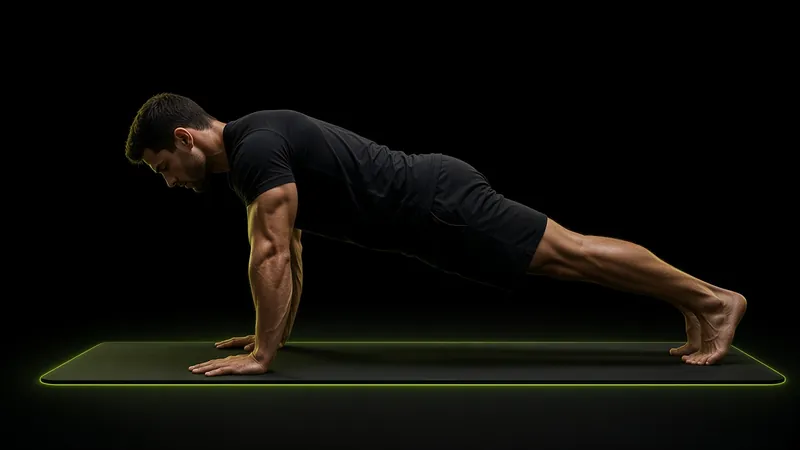
The push-up is one of the most useful exercises you can learn. It trains your chest, shoulders and triceps, and it asks your core to keep your body in a straight line. You can do it anywhere, and there is a version for every level.
This guide explains good push-up form, the most common mistakes, and a step-by-step set of progressions that take you from your first wall push-up to full push-ups on the floor.
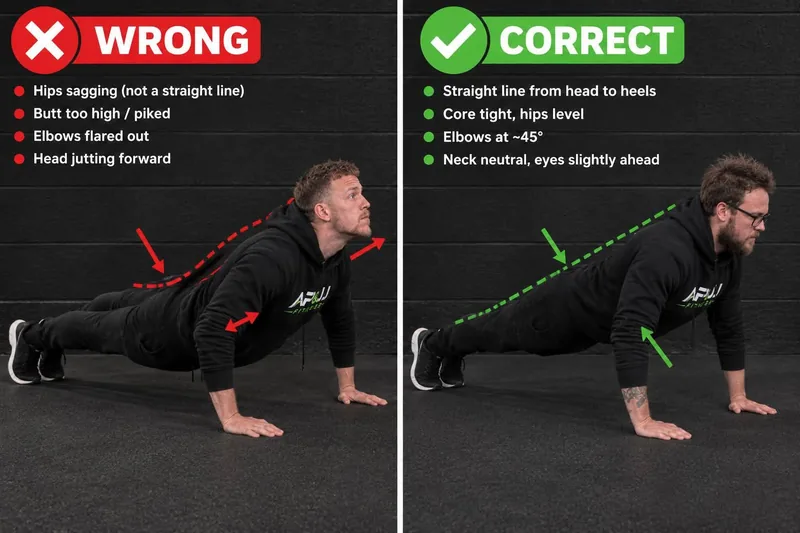
Good push-up form
Whatever version you are doing, the same points apply:
- Hands just wider than your shoulders, fingers spread and pointing forward.
- Body in a straight line from your head to your heels (or knees). Squeeze your glutes and brace your stomach as if you are about to be poked in the belly.
- Elbows angled back at roughly 30 to 45 degrees from your body, not flared straight out to the sides.
- Lower with control until your chest is a few centimetres from the surface, then push the surface away.
- Neck neutral. Look at the floor slightly ahead of your hands rather than craning your head up or dropping it down.
- Breathe. Breathe in on the way down, and out as you push up.
Common mistakes
- Sagging hips. This puts strain on the lower back. Brace harder, or choose an easier version so you can hold the line.
- Hips piked up high. This shortens the range and takes work away from the chest. Keep your body straight.
- Elbows flared at 90 degrees. This can irritate the shoulders. Tuck them back a little.
- Half reps. Going only a few centimetres down feels easier but builds less strength. A full range on an easier version is better than half reps on a harder one.
- Head poking forward. Your chest should reach the floor, not your nose.
The progressions
The higher your hands are, the easier the push-up. Work through these steps in order. Move on when you can do 3 sets of 10 to 12 reps with good form.
1. Wall push-up
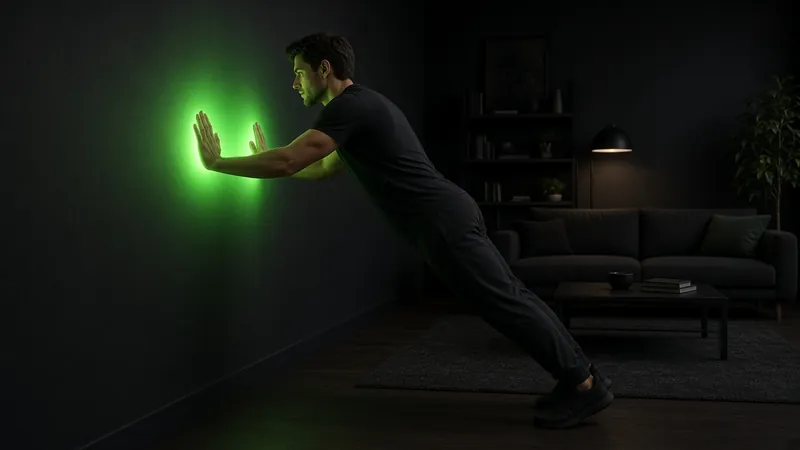
Stand an arm's length from a wall with your hands on it at shoulder height. Lean in, keeping your body straight, until your nose nearly touches the wall, then push back. The further your feet are from the wall, the harder it gets.
2. Incline push-up
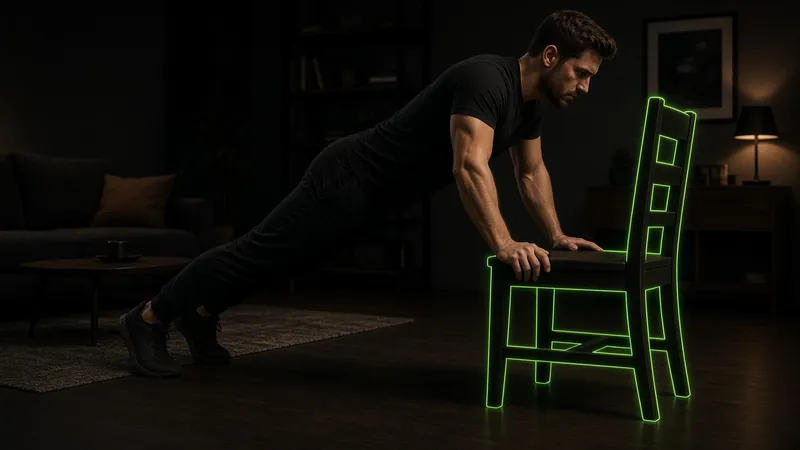
Put your hands on something solid such as a kitchen worktop, a sturdy table or a bench, and walk your feet back. Start with a high surface and work down to lower ones, such as a stair or a low bench. Make sure anything you use is stable and will not slide.
3. Knee push-up
Kneel on the floor with your hands under your shoulders, then walk your hands forward so there is a straight line from your knees to your head. Keep your glutes squeezed so your hips do not bend. Some people prefer to skip this step and go from a low incline straight to the floor. Both routes work.
4. Full push-up
Start in a high plank, hands under your shoulders and feet together or slightly apart. Lower as a single unit until your chest is just above the floor, then press back up. If you can only manage a few, do those and then finish the set on an incline.
5. Beyond the full push-up
Once 3 sets of 15 or more feel steady, you can make push-ups harder by slowing the lowering phase to three seconds, pausing at the bottom for a second, raising your feet on a step, or doing pike push-ups to put more work on the shoulders.
A simple push-up routine
Do this two or three times a week, on non-consecutive days, after a warm-up:
- Pick the hardest version you can do for at least 6 good reps.
- Do 3 sets, stopping each set with 2 or 3 reps left in the tank.
- Rest 60 to 90 seconds between sets.
- When you reach 3 sets of 12, move to the next progression and start again at 6 to 8 reps.
Who should take extra care
Push-ups put weight through your wrists and shoulders. If your wrists ache, try holding a pair of dumbbells or push-up handles so your wrists stay straight, or do push-ups on your fists on a soft mat. If you have a shoulder injury, or any pain that does not settle, speak to a GP or physiotherapist before you keep going.
Push-ups fit neatly into our beginner full-body plan and our no-equipment home workout.
Train with the free app
The APJJ Fitness app has a weekly plan builder, a 108-move exercise guide with easier and harder options, timers, a workout logger, gym games and a friendly social community. It is free to use in your browser.
Open the free appMore guides