APJJ Fitness guide
Beginner full-body workout plan
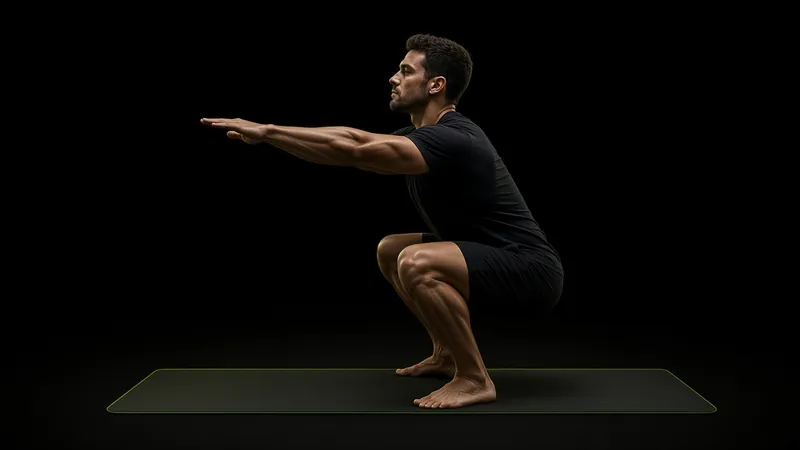
If you are new to training, a full-body plan is the simplest way to start. You train every major muscle group in each session, two or three times a week, and you get plenty of practice at the basic movements without needing to plan lots of different days.
This guide gives you a straightforward beginner plan you can do at home or in a gym, explains how to choose your sets and reps, and shows you how to make it a bit harder each week so you keep improving.
Why full body works for beginners
When you are starting out, your body responds well to almost any sensible training. What matters most is that you practise good technique, train often enough to learn the movements, and recover between sessions. Full-body training ticks all three boxes:
- Frequent practice. You squat, push, pull and brace in every session, so the movements become familiar quickly.
- Missed days hurt less. If you only manage two sessions in a busy week, you have still trained everything twice.
- Built-in rest. With a day off between sessions, each muscle group gets time to recover.
The UK Chief Medical Officers' physical activity guidelines suggest adults do muscle-strengthening activity on at least two days a week, alongside around 150 minutes of moderate activity such as brisk walking. A plan like this one covers the strength part.
The weekly layout
Pick two or three days with at least one rest day between them. For example:
| Option | Training days | Good for |
|---|---|---|
| Two days | Monday and Thursday | Very busy weeks, or your first month |
| Three days | Monday, Wednesday and Friday | Steady progress once the routine feels normal |
On the days in between, light activity such as walking, cycling or a gentle stretch is great. It is not compulsory, but it helps you feel less stiff.
The workout
Each session uses one exercise from each of the main movement patterns. Start every session with the warm-up from our warm-up routine guide.
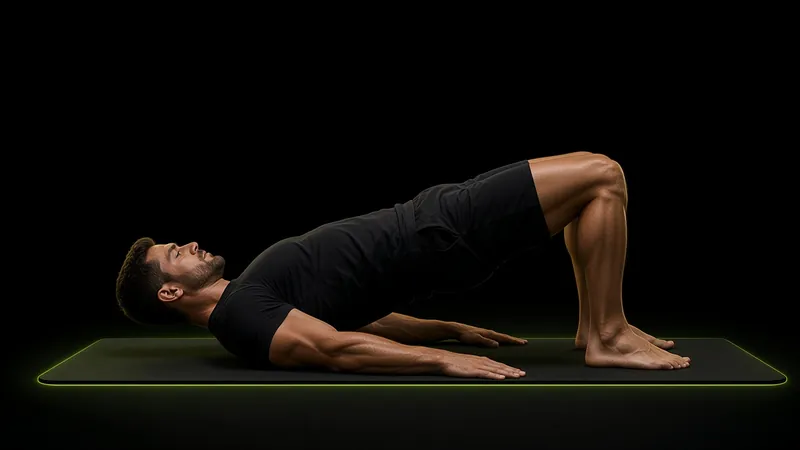
| Movement | At home | In a gym | Sets x reps |
|---|---|---|---|
| Squat | Bodyweight squat to a chair | Goblet squat with a dumbbell | 3 x 8-12 |
| Push | Incline push-up on a table or sofa | Dumbbell bench press | 3 x 8-12 |
| Hinge | Glute bridge | Dumbbell Romanian deadlift | 3 x 10-12 |
| Pull | Table row or towel row | Seated cable row or lat pulldown | 3 x 8-12 |
| Single leg | Reverse lunge | Step-ups onto a box | 2 x 8 each leg |
| Core | Forearm plank | Forearm plank or dead bug | 3 x 20-40 seconds |
Rest about 60 to 90 seconds between sets. The whole session, including the warm-up, usually takes 35 to 50 minutes.
How hard should it feel?
A useful rule for beginners is to finish each set feeling like you could have done two or three more good reps. That is hard enough to make progress but leaves your technique intact. If your form starts to break down, such as your knees caving in on squats or your hips sagging in a plank, the set is over, even if you have not hit the target number.
Some soreness a day or two after your first sessions is normal and usually fades within a few days. Sharp pain, or pain in a joint rather than a muscle, is a sign to stop that exercise.
Making progress each week
Progress comes from doing slightly more over time. This is called progressive overload, and for a beginner it can be very simple:
- Add reps first. Work within the rep range. When you can do the top of the range (for example 12 reps) on all three sets with good form, it is time to make the exercise harder.
- Then add load or difficulty. In a gym, use the next dumbbell up and drop back to the bottom of the rep range. At home, move to a harder version, for example from an incline push-up to a push-up on the floor.
- Keep notes. Write down what you did each session so you know what to beat next time. The free workout logger in the app does this for you.
A sample first month
- Week 1: two sessions, two sets of each exercise. Focus only on learning the movements.
- Week 2: two or three sessions, three sets of each exercise.
- Week 3: three sessions. Try to add a rep or two to some of your sets.
- Week 4: three sessions. Move up a weight or progression on any exercise where you hit the top of the range.
After four to eight weeks you can keep running the same plan with heavier weights, or move on to a plan with more variety. There is no rush. Many people make steady progress on a simple full-body plan for months.
Common beginner mistakes
- Doing too much too soon. Five hard sessions in your first week usually leads to a sore, tired second week. Start with two or three.
- Chasing heavy weights. Good technique with a lighter weight builds a better base than a shaky rep with a heavy one.
- Skipping the warm-up. Five to ten minutes makes the first sets feel better and helps you spot any niggles early.
- Changing the plan every week. Stick with the same exercises long enough to get better at them.
Where to go next
Once you are comfortable with the plan, read our guides on squat form and push-up progressions to tidy up your technique, and rest and recovery to get the most out of your days off.
Train with the free app
The APJJ Fitness app has a weekly plan builder, a 108-move exercise guide with easier and harder options, timers, a workout logger, gym games and a friendly social community. It is free to use in your browser.
Open the free appMore guides