APJJ Fitness guide
Squat form: how to squat properly
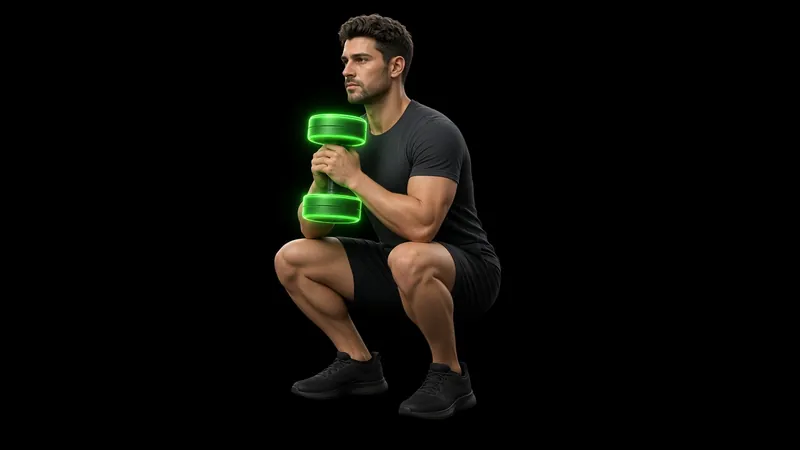
The squat is a basic human movement. You do a version of it every time you sit down and stand up. Training it builds strength in your thighs, glutes and core, and makes everyday tasks such as climbing stairs and lifting shopping feel easier.
This guide covers how to set up, how to move, the most common faults, and a simple path from the bodyweight squat to loaded squats in the gym.
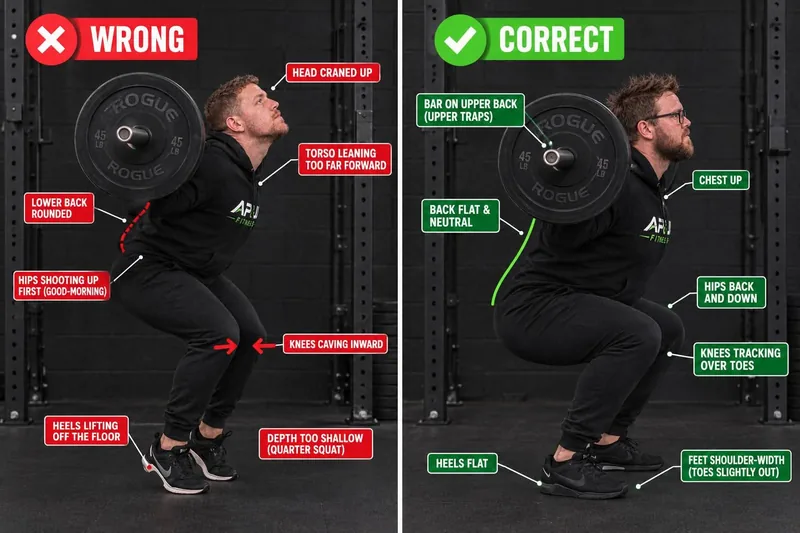
Set-up
- Feet about shoulder-width apart, or a little wider. Turn your toes out slightly, around 10 to 30 degrees. Small changes are fine. Find the stance that lets you squat deepest while staying comfortable.
- Weight spread across the whole foot: heel, big toe and little toe.
- Brace. Take a breath into your stomach and tighten your core as if you are about to cough. This keeps your spine steady.
- Chest proud and eyes looking forward or slightly down.
The movement
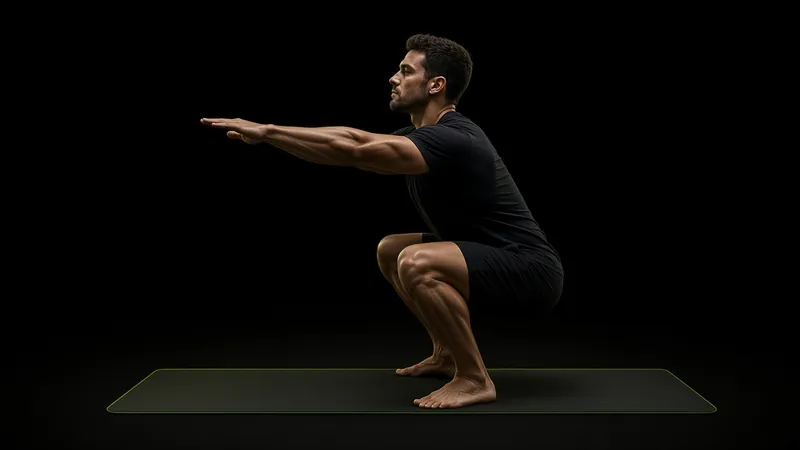
- Start the descent by bending at the hips and knees at the same time, as if sitting back and down between your heels.
- Knees follow your toes. Let them travel forward and out in line with your feet. Knees going past your toes is normal and fine for most people.
- Go as deep as you can control. For most people this is thighs at least parallel to the floor. Stop where your back starts to round or your heels lift.
- Drive up through your whole foot, keeping your chest up and knees out. Breathe out near the top.
Aim for a smooth, controlled pace: about two seconds down and one to two seconds up.
Common faults and fixes
| Fault | What it looks like | Try this |
|---|---|---|
| Knees caving in | Knees drift towards each other as you stand | Think "spread the floor" with your feet. Lighter weight. A light resistance band around the knees can act as a reminder. |
| Heels lifting | Weight shifts onto the toes | Sit back slightly more, widen your stance, or put a small plate under your heels while you work on ankle mobility. |
| Rounded lower back | The bottom of the spine tucks under at depth | Squat only to the depth you can hold a neutral back, and brace harder before each rep. |
| Chest falling forward | Torso tips over, the squat turns into a bow | Try a goblet squat. Holding the weight at your chest helps keep you upright. |
| Rushing | Dropping fast and bouncing out of the bottom | Slow the descent to three seconds and pause briefly at the bottom. |
Squat progressions
1. Box or chair squat
Squat down until you lightly touch a sturdy chair or box, then stand back up without flopping onto it. The target tells you how deep to go. Use a lower seat as you get stronger.
2. Bodyweight squat
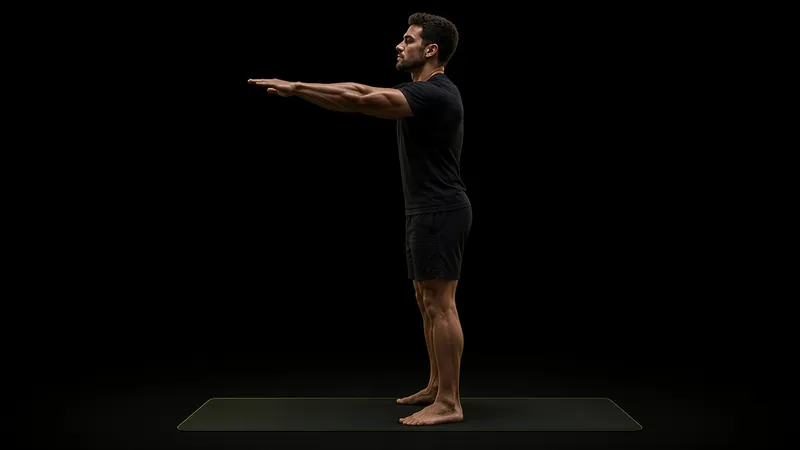
The same movement without the target. Work up to 3 sets of 15 with good form.
3. Goblet squat
Hold a dumbbell or kettlebell close to your chest with both hands. The weight in front acts as a counterbalance, which is why many people find their best squat depth with this version. It is a great main lower-body exercise for months.
4. Barbell back squat
When you are confident with goblet squats, you can learn the barbell back squat. Always use a squat rack with the safety bars set just below the bottom of your squat, start with an empty bar, and consider asking a qualified coach or gym instructor to check your first sessions.
How many sets and reps?
For general strength and fitness, 3 sets of 8 to 12 reps, two or three times a week, is a good starting point. Finish each set feeling you could do two or three more good reps. Add reps first, then weight, as described in our beginner full-body plan.
A note on depth and knees
You may hear that deep squats or knees going past the toes are bad for you. For most healthy people, a controlled squat through a comfortable range is a safe and useful exercise, and restricting the knees can just shift stress to the hips and lower back. That said, everyone's body is different. If a certain depth causes pain, work in a pain-free range and get it checked by a physiotherapist if it continues.
Warm up with our warm-up routine before squatting, especially in the gym.
Train with the free app
The APJJ Fitness app has a weekly plan builder, a 108-move exercise guide with easier and harder options, timers, a workout logger, gym games and a friendly social community. It is free to use in your browser.
Open the free appMore guides